
How can crime affect your wellbeing
Crime can affect your wellbeing in many ways.
It doesn’t matter if the crime happened to you, or to someone else. Crime can affect you physically and emotionally.
Physical reactions to being affected by crime can include:
- headaches or dizziness;
- muscle tension or pain;
- stomach problems;
- loss of appetite;
- chest pain or a faster heartbeat; and
- sexual problems.
Emotional reactions to being affected by crime can include:
- anger;
- confusion;
- upset;
- anxiety;
- stress;
- overwhelm; and
- feeling scared
It’s also common to experience tiredness or exhaustion, trouble sleeping, difficulty concentrating, and to blame yourself – even though it’s never your fault.
Some people feel very little at first. Your feelings can also change from day to day.
Whatever you're feeling, it's valid. We will believe you.
How to improve your wellbeing after crime
How you feel after crime is individual to you. What works for one person may not work for you.
But there are lots of things you can try, to help you feel better:
Having a daily routine can help things feel more familiar when life feels uncertain.
Try getting up, eating meals and going to bed at similar times each day. Even small things, like making a morning drink or getting dressed, can give your day some structure.
It's okay if your routine changes. Do what feels manageable for you.
Being around people you feel safe with can help you feel less alone.
This could be a family member, friend or someone else you trust. You might want to talk about how you're feeling, or you might prefer to spend time together without talking about what happened.
You can decide what you're comfortable sharing.
Doing something you enjoy can give you a break from difficult thoughts or feelings.
You could listen to music, watch your favourite programme, read a book or spend time on a hobby.
You might not enjoy things in the same way you used to, and that's okay. Start with something small, if you feel ready.
Getting some fresh air and spending time outdoors may help you feel calmer.
You could sit in a garden, visit a local park or take a short walk somewhere you feel safe.
You don't need to go far. Even spending a few minutes outside can be a good place to start.
Talking about how you feel can sometimes help you make sense of your thoughts.
If there's someone you trust, you could tell them how you're feeling or let them know what support you need.
You don't have to talk about what happened if you don't want to. Sometimes, having someone listen is enough.
Gentle movement can help ease tension and may improve your mood or sleep.
You could try walking, stretching, yoga or another activity you feel comfortable doing.
You don't need to push yourself or set big goals. Start slowly and listen to your body. Even a few minutes of movement may help.
After crime, you might look for ways to manage difficult thoughts or feelings.
Alcohol and drugs may seem to offer some relief at first, but they can make anxiety, low mood and sleep problems worse.
If you're using alcohol or drugs to help you cope, support is available. You can talk to someone about this without fear of judgement.
Writing down your thoughts and feelings can help you understand what's on your mind.
You could write about your day, how you're feeling or anything that's worrying you. You might also want to note small things that have helped you feel better.
There's no right way to keep a journal. You don't have to write every day, and you don't need to share it with anyone.
Being affected by crime can leave you feeling tired, even if you haven't been physically active.
Try to give yourself time to rest when you need it. This might mean taking a short break, sitting somewhere quiet or having an earlier night.
If you're finding it hard to sleep, try not to put pressure on yourself. Rest can still be helpful, even when you can't sleep.
You may find yourself thinking about what happened or wondering if you could have done something differently.
Try to be kind to yourself. What happened isn't your fault, and there's no right or wrong way to feel.
You don't need to rush yourself or meet anyone else's expectations. It's okay to take things one day at a time.
You don’t have to do any or all of these. Do what feels right for you.
Our self-help app, My Support Space, can you help you try these. It’s free, and confidential. Download, here.
Talk to an expert
When you’re ready, talking can help. Our trained Support Works will listen to you and believe you. Learn more about how we can help, here.
If you’re not ready to talk to us, there are other people you can talk to, such as:
- a friend or family member you trust;
- your GP;
- a counsellor or therapist;
- the Samaritans;
- mental health charity Mind;
- a member of a faith group; or
- a specialist support service near you.
You don’t need to have reported the crime to talk to us. Our Support Workers can talk with you about how you’re feeling, and what support could help.
My Support Space:
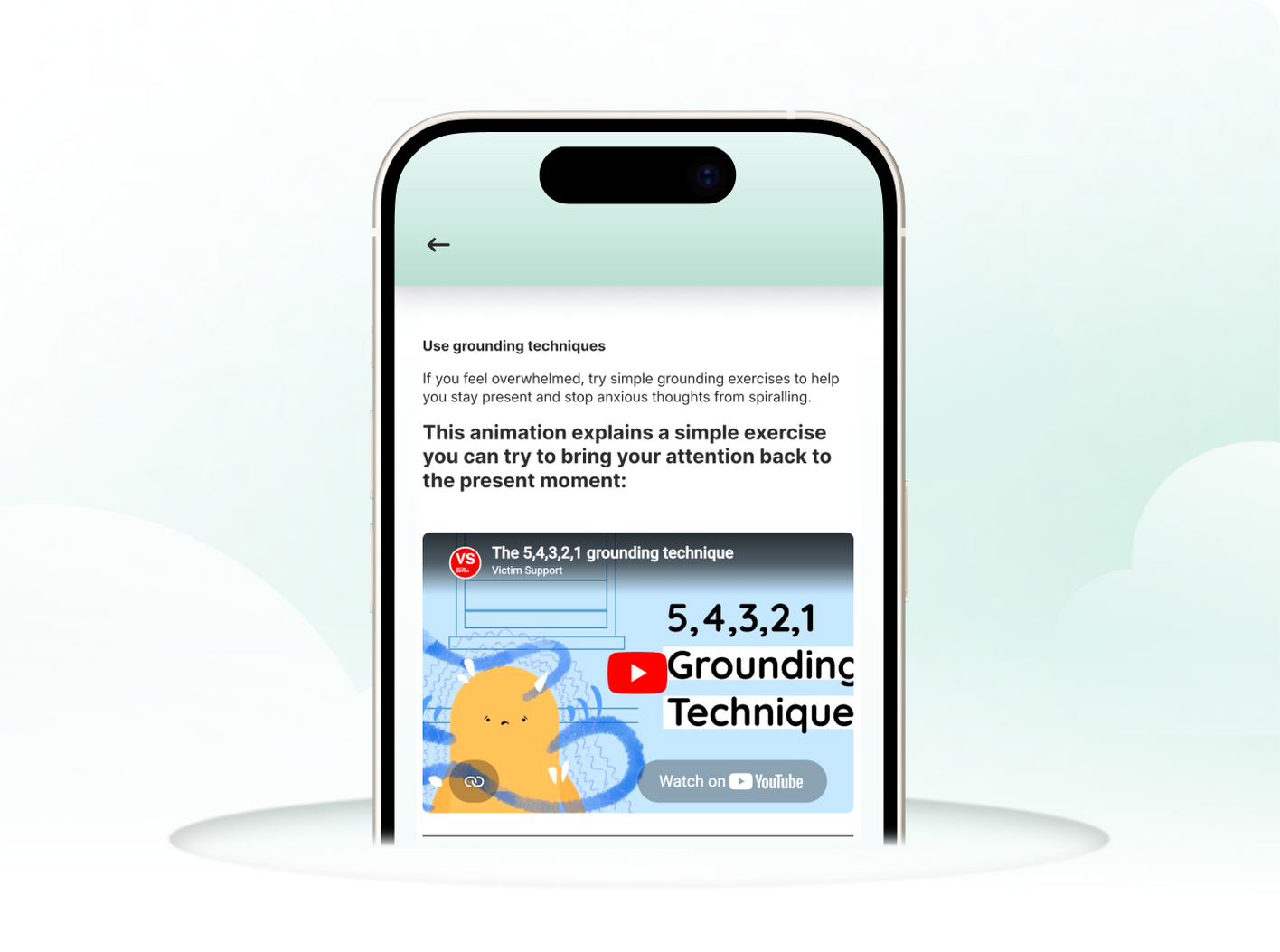
My Support Space is a free and confidential self-help app. It can help you, if you’re finding things hard after crime.
It includes guides, self-help tools, journals, videos and activities. These can help you make sense of your experience and how you’re feeling. They can also help improve your wellbeing.
Self support
Download our free My Support Space app
Complete interactive guides, access coping techniques and track your progress.


Other support available:
Webinars
We also run webinars and group sessions. Read more about self-support.
If you’re supporting someone
Learn more about how we can support you.
View our frequently asked questionsContact us
You can contact us in three ways. Contact us today for free and confidential support.
0808 168 9291
00:00 – 00:00, Mon – Sun.
