
In an emergency, always call 999.
How to stay safe after crime
If you’re worried about your safety, we can help. We can talk through your situation and help you make a safety plan that works for you.
If you’d be more comfortable doing this yourself, you can read more, below.
To help keep yourself safe when you’re not at home:
- tell a friend or family member what your plans are, including what time you expect to be home;
- share your location with a trusted friend of family member using your smart phone;
- stay in busy, well-lit areas;
- book a taxi in advance, when you can;
- avoid accepting lifts from people you don’t know;
- carrying a personal safety alarm; and
- avoid wearing headphones, so you can stay alert around you.
Support for domestic abuse
Domestic abuse serviceTo help keep yourself safe when you’re at home:
- Keep doors and windows locked
- Keep your phone close and somewhere you can easily access it
- Installing CCTV, such as a doorbell camera
- Ask to see ID for anyone who comes to the house that you don't know
- Keep valuables out of sight from windows
- Have a designated helper who can be a friend, relative or neighbour
- Speak to your landlord or local council if you feel unsafe
To keep yourself safe online:
- use security software on your computer, such as antivirus software, and keep it up to date;
- delete emails you don't recognise without opening them. Never click on links in emails from unknown senders;
- set up a filter to block junk or spam email;
- use a password manager to help keep online accounts secure;
- only use websites, you trust, such as well-known shops and holiday provider. Check a company is real before you send payments;
- use a screen protector for your phone that stops other people from being able to see what you’re doing;
- apply security settings on all your social media accounts
- contact your internet provider and ask them about child-friendly security settings
Talk to any children in your care about staying safe online. You can also ask their school for advice, or view our help for children and young people.
If you're worried about fraud, you can apply to CIFAS for protective registration. This adds another layer of security when you buy things online or in store.
A safety plan is a plan for what you need to do in a crisis, for example, a crime. It's worth writing down your safety plan somewhere safe so that you know where it is if you need it.
Some common areas that you may want to consider are:
- Legal – such as details of your local police
- Children – including who should care for your children if necessary
- Housing – there are organisations who can help with emergency housing if you find yourself without somewhere to live
- Finances – how to access your bank account and details, as well as any benefits you may be entitled to
- Health and wellbeing – any medication you may take and details of any medical conditions
- Immigration – details of immigration status, if relevant
You can get support by downloading our self-help app, My Support Space, or by contacting us.
To get support from us, you can:
- Call us: 0808 168 9291;
- Start a live chat; or
- Fill in our online form.
Further information about contacting us can be found here.
A trained support worker will guide you through how support works, and ask you some questions, so that we can understand your needs.
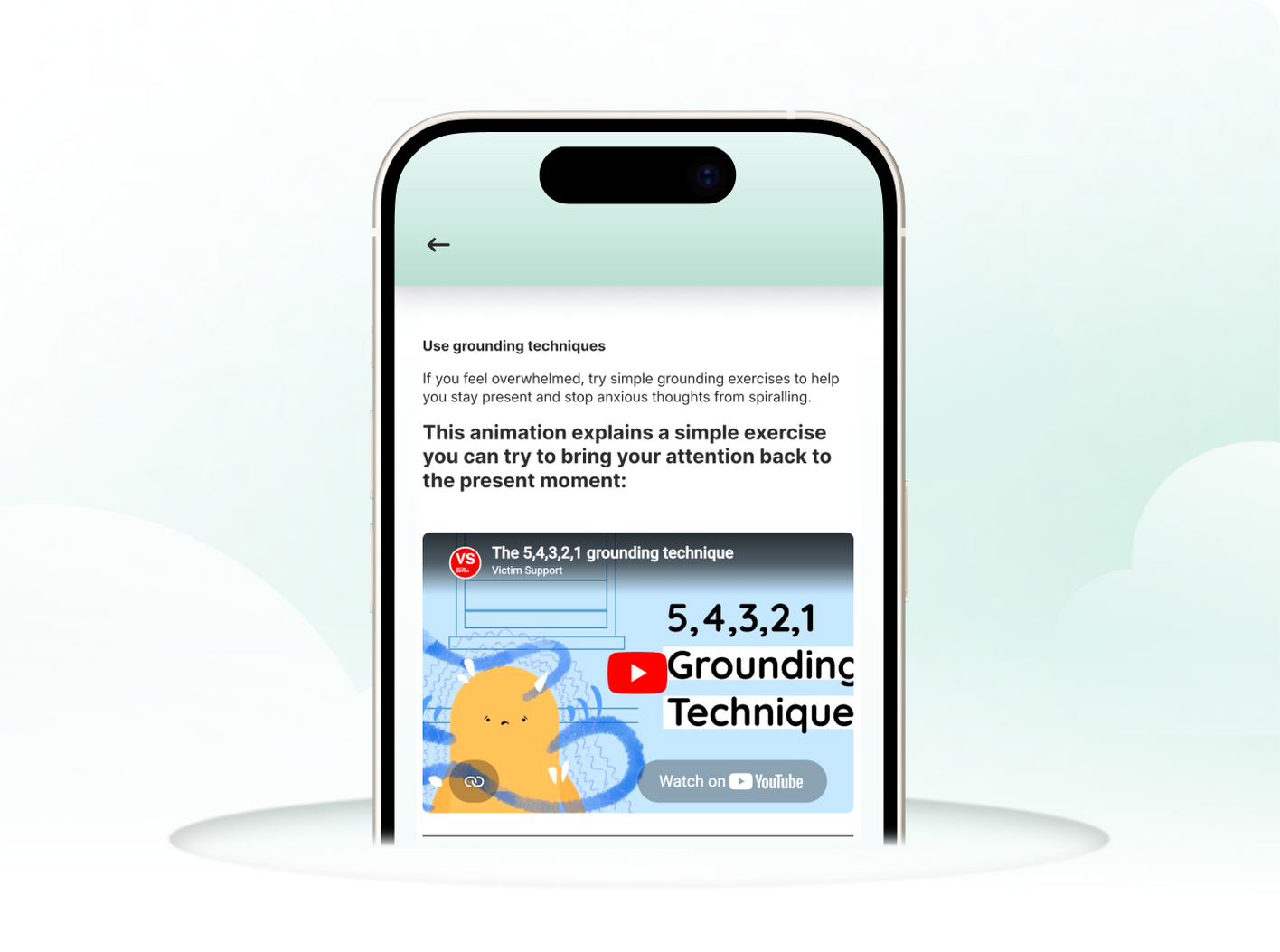
Self support
Download our free My Support Space app
Complete interactive guides, access coping techniques and track your progress.



Learn more about how we can support you.
View our frequently asked questionsContact us
There are three ways you can contact us directly.
0808 168 9291
00:00 – 00:00, Mon – Sun.
